
About Brian
Experience, theory, contemplation, and reflection guide my perspectives on leadership, learning, and life.
My work sits at the intersection of leadership and learning, and doesn’t avoid the difficult elements or emotions that drive organizational behavior, including those related to loss, identity, and the hidden, unconscious influences on our work.
I coach executives and other leaders, consult to organizations, and design and offer leadership development experiences that explore what other programs might avoid — seeing the grief, anxiety, and existential challenges that drive the work of leadership and how we actually behave under pressure, when the outcomes are uncertain.
The path here
After studying philosophy and starting my career in advertising at McCann Erickson, I found myself drawn not to how organizations present themselves, but to what actually happens inside them. That question led me to study business and law. As an investigator at the SEC and federal prosecutor in Brooklyn, I examined leadership failures. Then as defense counsel for international banks, I saw the same dynamics and challenges from the other side. I spent years analyzing what happens when leadership failed and toxic cultures took over.

The scale of greed and crime surprised me. But I learned more from what drove it. The fear I witnessed wasn't simply about losing money or status. It was existential — the terror of who you might become, or the horror of losing who you were. This didn’t result from a lack of skills, capability, or training. It came from a lack of awareness of what was really going on, both within the people with authority and power and the invisible dynamics shaping the work and the systems around them.
That recognition led me to study and practice leadership itself. In senior advisory roles to Presidentially-appointed and Senate-confirmed leaders at the U.S. Departments of State and Treasury, I felt the weight of that responsibility firsthand — navigating interagency politics, high-stakes decisions, and extreme uncertainty as we oversaw missions and trillions of dollars through the global financial crisis, COVID-19, and the beginning of multiple global wars and conflicts. I also learned how to build and manage a culture that supported people, while aligning with our strategy. I balanced the need to deliver results for our external stakeholders, while considering the scrutiny, integrity, and accountability public service at the C-suite level required.
To go deeper, I trained as an executive coach, then as a specialist in adult development, adaptive leadership, and organizational behavior. I wanted to understand not just how leaders perform, but how they grow, and why most leadership development training often fails to produce lasting change. I studied group relations and systems psychodynamics in the Tavistock tradition and learned to see the hidden and unconscious dynamics shaping how organizations actually function. And I became a certified grief educator and trauma-informed coach, because loss kept appearing at the center of every significant leadership challenge…but no one was seeing or naming it. That led me to study terror management theory and the research on how awareness of our mortality quietly shapes human motivation, identity, and behavior in ways most leaders never know.
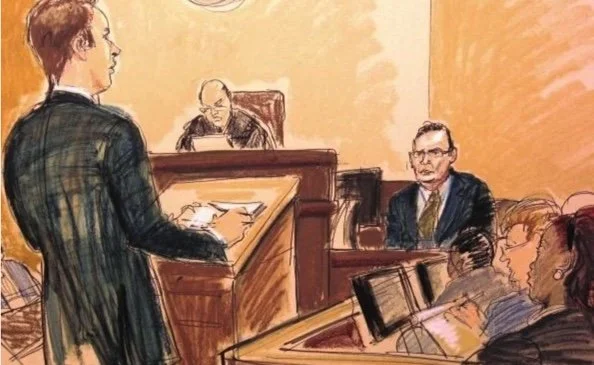
Special Assistant U.S. Attorney (E.D.N.Y.) Brian Sano
U.S. v. Cioffi and Tannin (Bear Stearns), 2009
Courtroom sketch by Elizabeth Williams
How I work
I pay close attention to what is present, what is avoided, and what is trying to be said but has not yet found a voice. In moments of tension, conflict, uncertainty, or change, my role is to help create enough space for people to stay with ambiguity or complexity long enough for new understanding to emerge — rather than rushing toward premature solutions.
This might sound simple. It is not. It requires holding multiple perspectives at once, tolerating not-knowing, and being willing to name what others are sensing but won't say. It also requires noticing whatever I’m feeling or thinking and what we can learn from that. Whether I'm coaching a C-suite executive one-to-one, consulting to an in-tact leadership team, or facilitating a group to discuss a case study or novel together, the underlying practice is the same: my role helps people see what is actually happening — within themselves, between each other, and in the systems they're part of — so they can respond with greater awareness, honesty, care, and skill.
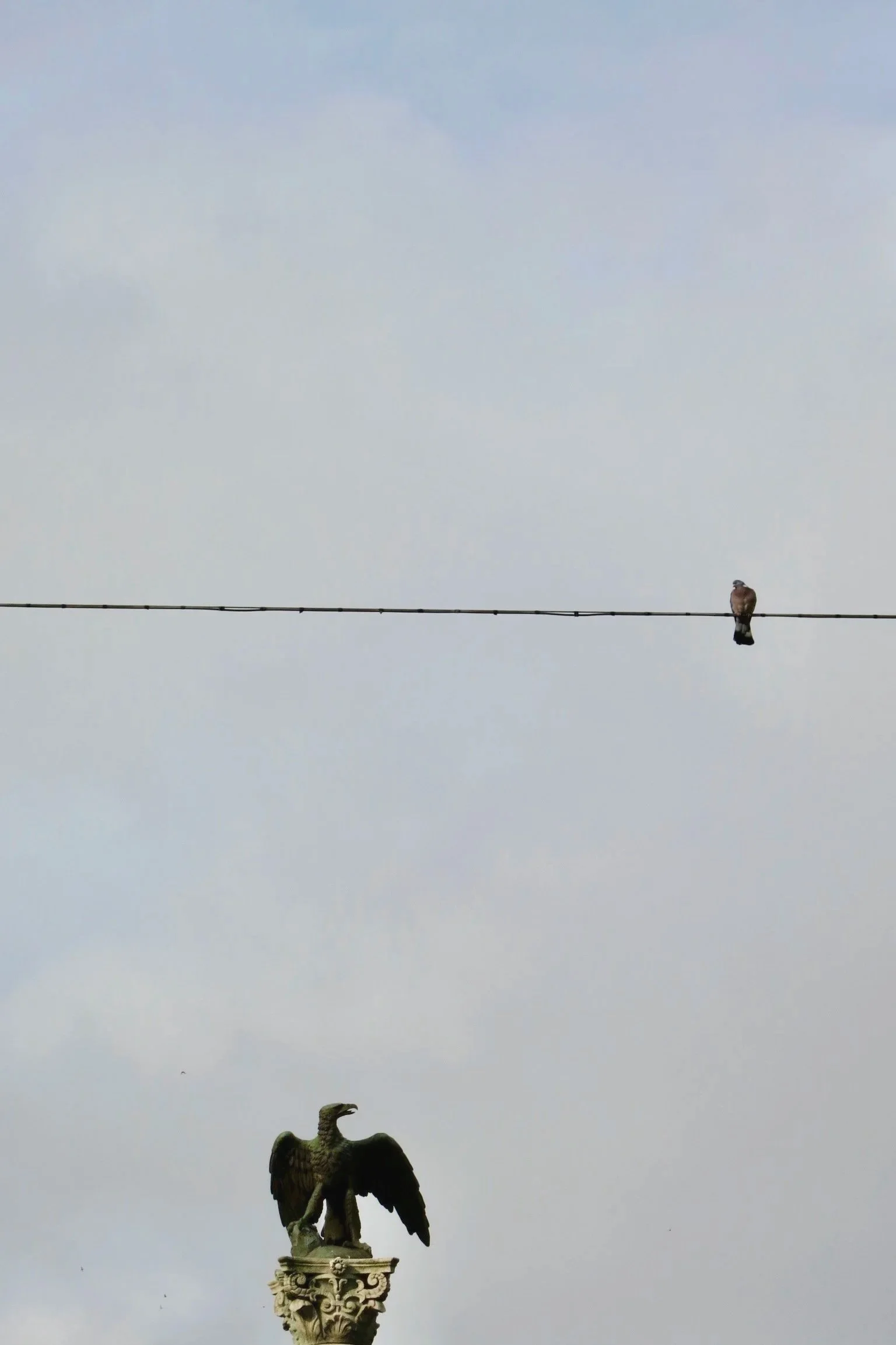
I draw on established research and theory from various fields, but I stay grounded in lived experience. My approach often involves creative and contemplative methods — literary fiction, film, LEGO® Serious Play®, photography, reflective practice — because the most important dimensions of leadership rarely reveal themselves from conventional and comfortable methods. They have to be felt before they can be seen. And they have to be seen before they can be understood to move forward.
What guides the work
Three values run through everything I do: curiosity, courage, and care.
Curiosity keeps the work open and alive — resisting the pull toward judgment or premature solutions. Courage allows difficult truths, tensions, and losses to be named and held, rather than avoided. And care ensures that people and the systems they are part of are treated with respect and humanity, even when meaningful change requires discomfort and letting go.
A Contemplative Orientation
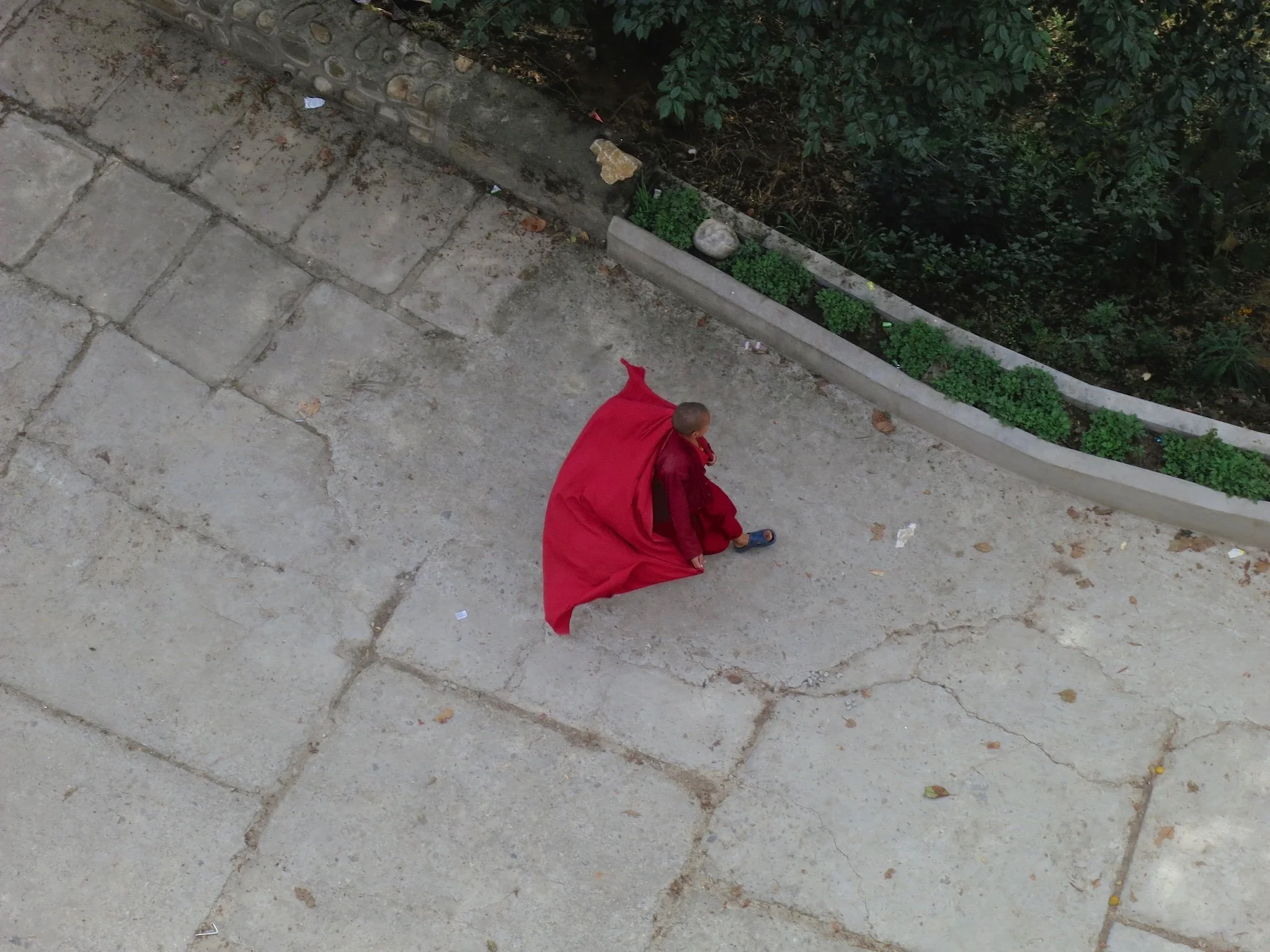
My work is shaped by a lifelong exploration of contemplative practice — most visibly through Miksang contemplative photography, a discipline rooted in the Tibetan Buddhist tradition of meditation and awareness. Miksang teaches a way of seeing that is direct, unbiased, and free from the habitual labels or judgments we place on our experience. It has profoundly influenced how I show up in every space I enter — with intention, presence, and an openness to what is actually here, not what I expect or ignore.
This isn't a distraction from my professional practice; it is the foundation of it. I take that same quality of intention and attention to each coaching conversation, program I design, or group I facilitate. That direct clarity makes them genuine and transformative.

Interested in working together?
If you are navigating change or something that conventional approaches haven't been able to address — or if you're curious about what a different kind of partnership might look like — I'd welcome the conversation to explore it together.