A bigger boat: What leadership can learn from the sea
I learned to swim before I could walk.
Well, by "swim" I mean my dad threw me — lovingly — into the shallow end of our inground pool and I figured it out. Once, as a toddler, I even held my breath underwater for minutes when my godfather got distracted while on lifeguard duty. "No drinks," I told my parents when they pulled me out.

Our family pool in upstate NY, circa late 1970s. Photograph by Joseph B. Sano.
Every summer or so, we'd go as a family, or with cousins or friends, to the beach — up and down the East Coast, from New Jersey to Cape Cod, sometimes as far south as Virginia or Myrtle Beach.
I found building sand castles fun, but I loved body surfing and boogie boarding. I loved the anticipation. The strategy. The challenge. The feeling when I timed it just right and rode the wave all the way into shore. I'd stay in the water for hours. Shriveled, ecstatic, and exhausted by the time I came out.
Still, it was hard. And sometimes scary.
The threat underneath the surface
I was a child of the '70s and '80s — raised by Steven Spielberg. E.T. phoning home. Indiana Jones racing the Nazis to the Ark. Marty McFly trying to get back in time. John Williams scored my dreams and my fantasies; he also set the soundtrack for my fear.
Jaws.
The fin, just above the water. Those two notes: E…F…E…F…, which I'd later play on our piano without anyone asking. Teasing the ever-present threat — the shark that lurked somewhere beneath the surface.
So, despite my love of the water, I grew up afraid of being in it. The Atlantic Ocean was amazing. It was warm. The waves were wicked. And I was afraid of sharks.
I was afraid of the threat I could not see.
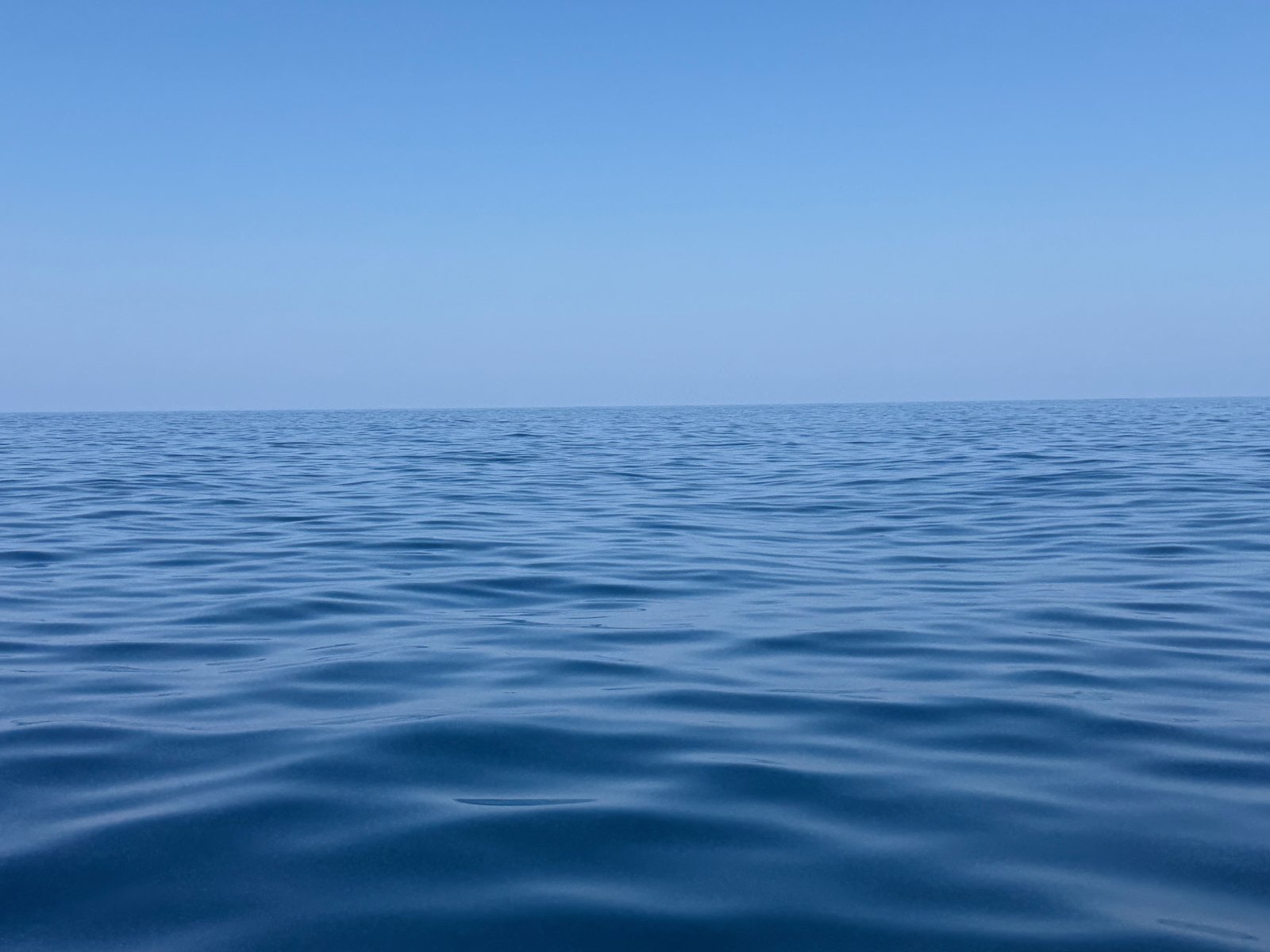
The Mediterranean Sea, Malta. Photograph by Brian Sano
Seeing beyond and beneath the surface
As an adult, I tried to face that fear directly. I learned, literally, to see beneath the surface.
Once I met my wife, who grew up on the beach, we started snorkeling — aiming for yearly trips to the Caribbean. I was fascinated by how clear the water could be, and how different it looked inches above the surface versus the moment I went under. It was another world. But it had been there the entire time.
Since moving to Malta, my love for the sea has grown deeper — in part because it's easier to see. The water here is crystal clear.
I'm learning to free dive, and intrigued by the idea of scuba diving…wondering what it looks like to go even deeper, including into the many shipwrecks around our islands.
There are fewer sharks in the Mediterranean, if any. Which made me contemplate: what was I really afraid of?
Why is Jaws so scary, when you almost never see the shark? Maybe that's the point (no pun intended). It was never the shark itself. It was what I couldn't see — but dreaded.
The unknown. Potential loss. Even death.
A bigger boat?
Perhaps the same is true for leadership — especially leading people through change and uncertainty.
In my experience, whether coaching, advising, consulting, designing and running leadership cohorts, or exercising leadership in my own senior executive roles, the real threat is almost never the one on the surface — the presenting problem, the part we already have a technical solution for. The answer is usually more than realizing "you're gonna need a bigger boat," as Chief Brody calmly concludes the first time he sees the shark up close.
The real work of leadership lies beneath the surface.
The deeper fears no one's named. The feelings about the losses or potential losses no one's containing. The grief no one's witnessing. The death anxiety out of sight and out of mind.
This includes seeing, respecting, and working with the unconscious dynamics between people — within and across teams, organizations, or larger interconnected systems.
You can avoid all of it and keep the beaches open. Most people in positions of authority do.
Or you can learn to see what's living below…before it surfaces.
The work of leadership demands more than managing tasks, goals, strategy, or plans. More than vision.
It's an art of seeing.
Seeing Deeply: A leadership challenge
How might we see more clearly — to appreciate and use what's lurking or living beneath the surface, in order to lead more effectively?
Here's a practice to deepen your capacity to see from multiple perspectives and depths, and to hold and lead people through uncertainty and change:
Reflection: Think of a past or current leadership challenge you want to learn from — particularly one where you were initiating or responding to change that carried some heat, or stirred difficult emotions or resistance in people, including yourself.
Level 1 - Swimming: What do you see on the surface? What are the presenting problems — the ones you or others have already acknowledged and identified?
Level 2 - Snorkeling: What fears or losses might be lingering just beneath the surface, in your workplace or environment? Personal or professional ones people might be holding onto. Related to role or identity. What would it take to see those more clearly — to honor them, and surface them for real exploration with others?
Level 3 - Scuba: What terror might be lurking even deeper, driving the resistance to change? What existential fears might be unconsciously terrorizing your ability to lead? Even the fear of death itself.