Twenty years of leadership books taught me to see. Twenty novels showed me how to feel.
To read…or not to read…?
That is the question I've asked myself most of my adult life.
For work? For fun? Both/And…?
But perhaps the answer lies in the question itself — or questions, to be more specific.
Twenty years of nonfiction
For the last twenty years, as I investigated, studied, and practiced leadership, then trained to be an executive coach and organizational consultant, I read hundreds, maybe thousands, of nonfiction books, biographies and memoirs, academic papers, business articles, and case studies with teaching notes. And that does not include all the tomes of case studies from three years of law school.
The topics varied but had similar themes: leadership (and apparent good/bad examples of it), learning, teaching, adult development, psychology and sociology, history and anthropology, human-centered design, communication, emotional intelligence, culture, strategy, group relations, systems psychodynamics, and organizational behavior.
I aimed for about thirty books a year — because that's what I read successful leaders did. As U.S. President Harry S. Truman put it: “Not all readers are leaders, but all leaders are readers.”
And so I read. It helped. A lot. Until it didn't.
The ultimatum
When we decided to move to Malta from Washington, DC last year, my wife gave me an ultimatum: I could take with me whatever books would fit on the three bookcases I was bringing to my new home office.
I took the physical challenge.
I mean, these books felt like they were a part of me. My life. My journey.
I planned an extra trip to Malta a few months before we sold everything and boarded a one-way plane. Mostly to measure the walls twice, along with some other small tasks.
The books that didn't make the cut — about twelve Bankers boxes worth — I donated. Books that had carried me for years, which I kept across many moves.
It was a different kind of letting go…closer to grief than I expected. The kind that comes with leaving a whole life behind: the work, the career, the version of myself those shelves had been built by and for.
Reading again, in a new way
To help cope with the stress, trauma, and grief of the move and a new stage of my life, work, and career, I found myself reading again, but in a new way.
I returned to reading more fiction.
My wife reads about a hundred novels a year. For the past 17 years, she has been telling me to read more novels. So had my sister, who has a PhD in sociology. For once, with the old shelves emptied and contemplating the long trip ahead, I listened. I needed a break. A fresh start.
So I started reading and listening to more novels. Classic ones. New ones. Bestsellers. American. European. Queer. Straight. Horror. Romance. Fantasy. Apocalyptic. While cleaning the house for the last time. On the journey over. In the transitional space in between lives and worlds. Once we arrived, they helped me handle the household chores, the hardware-store runs, new dog walks, and immigration paperwork. Now, they join me on the beach.
Something happened that I didn't expect.
I started to see my work in the novels, and the novels in my work.
Over the past decade, I loved reading leadership case studies and teaching notes from the Harvard Business School, Harvard Kennedy School, Stanford Graduate School of Business, INSEAD, and others. I learned to write and teach with them and like them as I designed and delivered bespoke leadership programs inside the U.S. government. I loved learning about the protagonists, their systems, their stories, and their struggles. They reminded me of the Choose Your Own Adventures books I loved as a kid. What would I do, in their shoes, faced with their dilemma?!
But my colleagues and clients often asked what these had to do with their roles or jobs. How could studying Margot Robbie as Barbie help with overseeing the State Department? Or fraud in COVID-19 relief programs? What could senior executives learn from poet laureate Amanda Gorman? Or a fictional Sicilian chef/restaurant owner?
As we explored further, the answers came from their own questions.
A leadership case study is, at heart, a story about people in role, with authority and/or power, inside the boundaries of a system. They face difficult, real tasks and challenges, under immense pressure, with significant risk. Regardless, they are still human beings.
We can learn from them, whatever their line of work. Where they saw clearly. Where they didn't. About themselves. Who they were. About the system. What it asked of them. Where they held, or even moved, people's hearts and minds. Where they failed. And what they learned — or didn’t.
As a senior executive, I'd trained myself to read — and lead — for exactly that.
What novels taught me that case studies couldn't
As my journey to Malta began, I started seeing novels the same way. The characters were in systems too. They held authority. Some fought it. Some fell under it. They struggled with their tasks. Their boundaries. Their roles and identities. They loved. They lost. They dreamed; some dreams became nightmares. They had hope. And sometimes, someone or something helped guide them on their journeys.
I was learning the same things I taught about leadership, learning, and life, but from another perspective.
And I noticed the novels offered more than the case studies ever had.
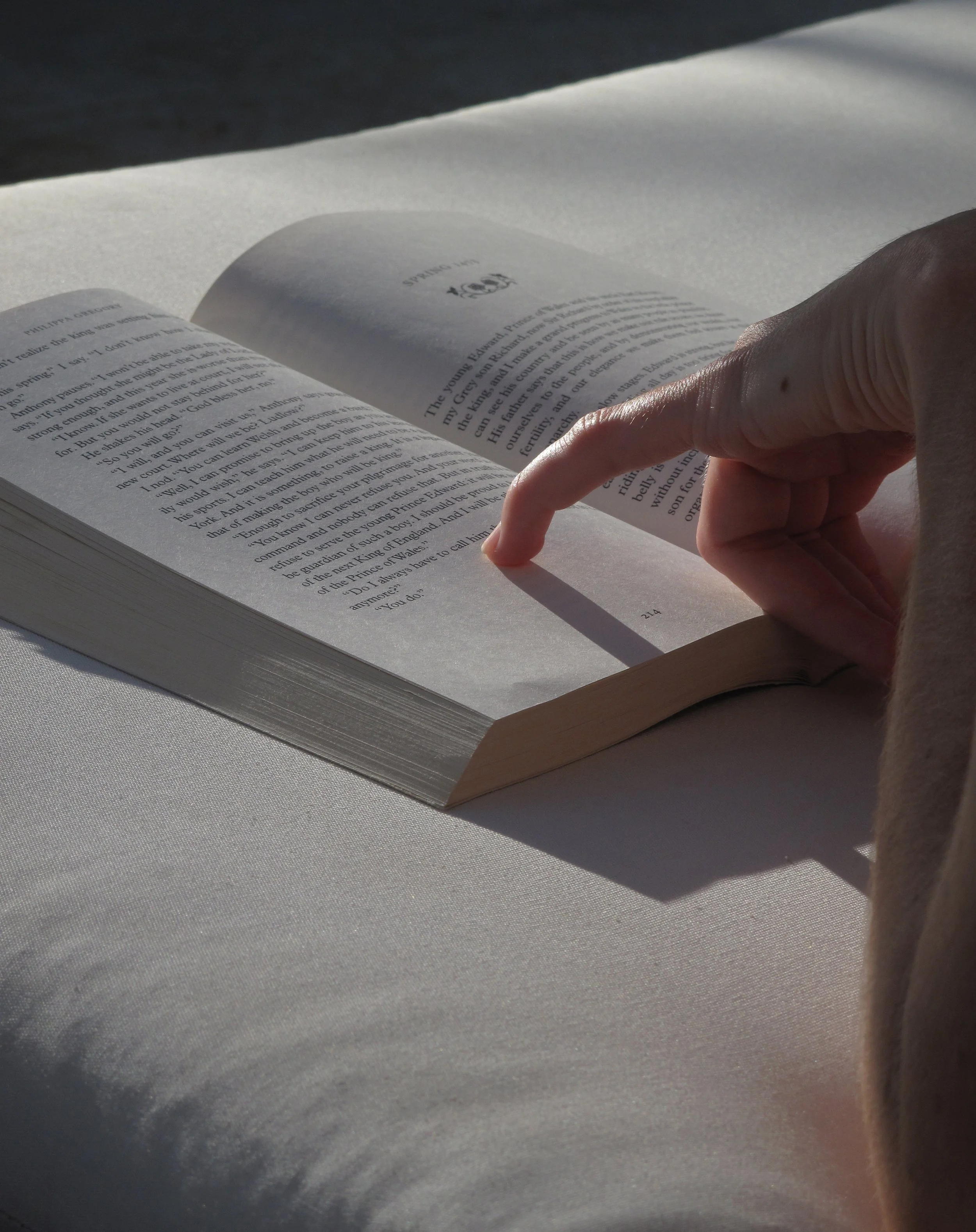
Photograph by Brian Sano
I didn't just analyze these characters, the organizations, or their leadership. I saw more than an approach, framework, or tool to use with others. I saw them grow. I grieved with them. I witnessed their losses. I felt their longing, and their love. The things they couldn't say. Or didn't have the courage to do.
Their "lives" touched me. I stayed with them — and they stayed with me.
The case studies had taught me to see. How people act or think. How systems operate and why. The novels did too. But they also showed me how to feel. For myself and for others.
They helped me better understand how it feels to be a human being, making sense and finding meaning inside a human system. Humans like me. And others, whose struggles I couldn't see or ever imagine.
In a way, I felt like they saw me too. Or at least they held up a mirror. The 20 novels — which I’ll share soon — created an environment to hold and contain my experience. My pains. My fears. My mistakes. My doubts. My imperfection. My loss. My hopes and dreams. Maybe even my humanity.
They left me wondering: can leadership do that too?